Which Backpack Fabric for Which Use?
Short answer: for most custom backpack programmes, 600D polyester covers school and promotional work, 900D–1000D polyester or nylon covers business and travel, ripstop nylon covers lightweight and packable, and canvas covers heritage and retail looks. The denier number tells you thread thickness, not quality — a coating and a weave matter more.
Reading the specification
Denier (D) — the weight of the yarn. 600D is heavier than 300D. Higher denier generally means more abrasion resistance and more weight, but it doesn't tell you about tear strength, water resistance or hand feel.
Weave — plain, Oxford, ripstop, twill. Ripstop's grid stops a small tear from running. Oxford is a basket-type weave common in bags.
Coating — PU or PVC on the back face. This does most of the water resistance work, not the fabric itself. "Water repellent" and "waterproof" are not the same claim, and the difference is usually the coating plus how the seams are handled.
By use case
| Use | Common choice | Why | Trade-off |
|---|---|---|---|
| School | 600D polyester | Cost-effective, holds print well, adequate abrasion resistance | Heavier than nylon at equal strength |
| Business / laptop | 900D–1200D polyester, or nylon with PU coating | Structure holds shape; looks cleaner | Higher-denier fabrics can look industrial unless finished well |
| Outdoor / hiking | Ripstop nylon, higher-denier nylon | Better strength-to-weight; tear resistance | Nylon absorbs more water than polyester unless coated |
| Lightweight / packable | 210D–420D ripstop nylon | Folds small, very light | Less abrasion resistance |
| Promotional | 600D polyester, non-woven | Cost, print area | Non-woven has a short service life |
| Retail / heritage | Cotton canvas, waxed canvas | Look and hand feel | Heavy; absorbs water unless treated |
| Sustainability-led | Recycled polyester (rPET), recycled nylon | Same construction behaviour as virgin equivalents | Costs more; recycled content documentation is arranged with the body you nominate, per project |
Nylon or polyester?
The most common question, and the honest answer is that it depends on what you're optimising:
| Nylon | Polyester | |
|---|---|---|
| Strength per weight | Higher | Lower |
| Abrasion resistance | Higher | Good |
| Water absorption | Absorbs more | Absorbs less |
| UV resistance | Degrades faster | Holds colour longer |
| Print behaviour | Harder to print bright colours | Takes print well |
| Cost | Higher | Lower |
For most custom programmes, polyester is the default and nylon is the upgrade — chosen when weight, tear strength or a technical look matters more than cost.
What the specification should say
A fabric line that just says "600D" is incomplete. A usable specification includes:
- Fibre (polyester / nylon / cotton / recycled equivalent)
- Denier
- Weave (plain / Oxford / ripstop / twill)
- Coating and whether it's on one or both faces
- Lining fabric — often forgotten, and it's what the customer touches
- Colourfastness expectation if the bag will see sun
Common mistakes
Treating denier as a quality score. A well-coated 600D can outperform a bare 1000D for water resistance.
Specifying the outer and forgetting the lining. The lining affects perceived quality more than most buyers expect.
Assuming "waterproof" from a coating alone. Seams, zips and panel joins decide whether water gets in.
What we do
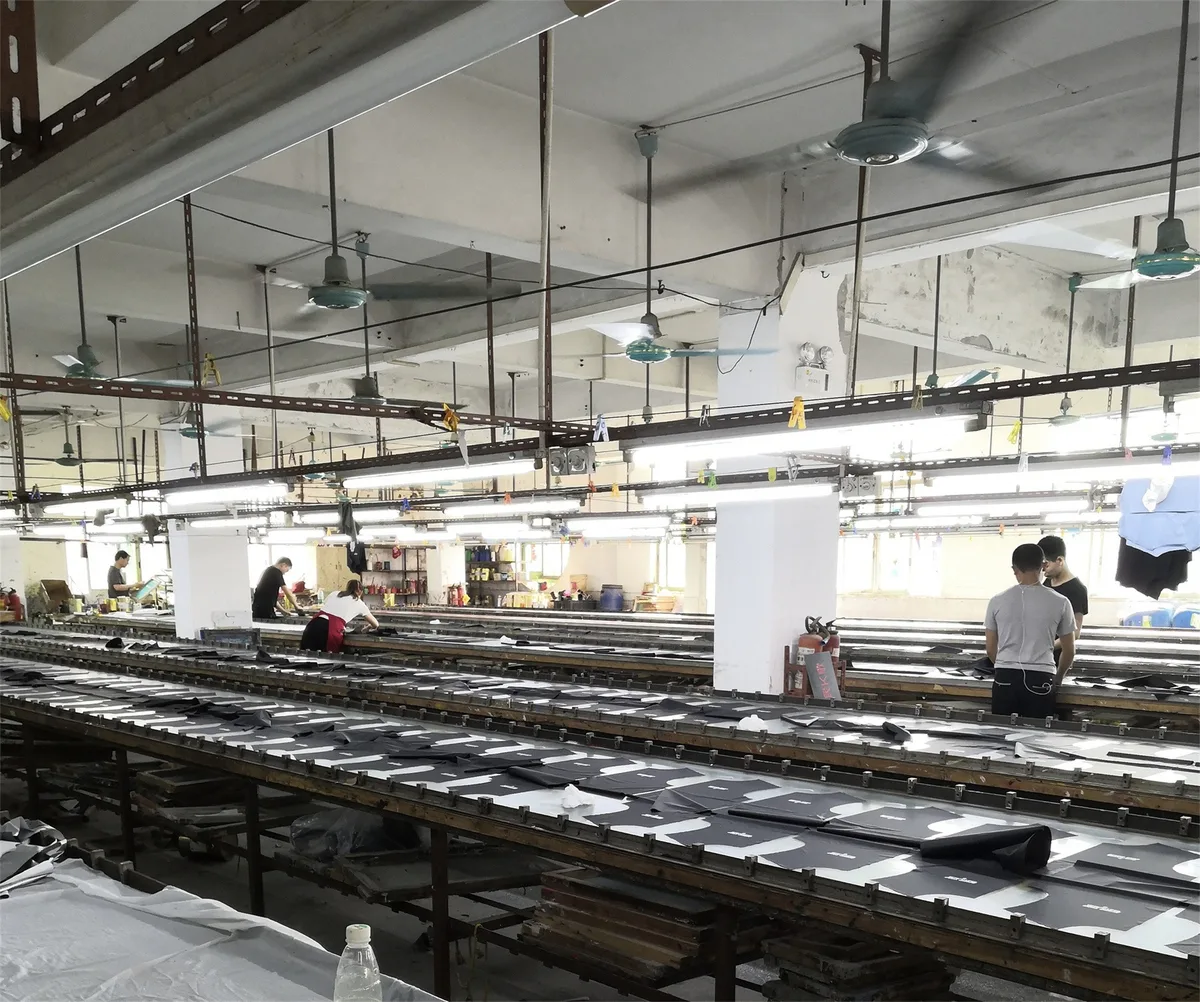
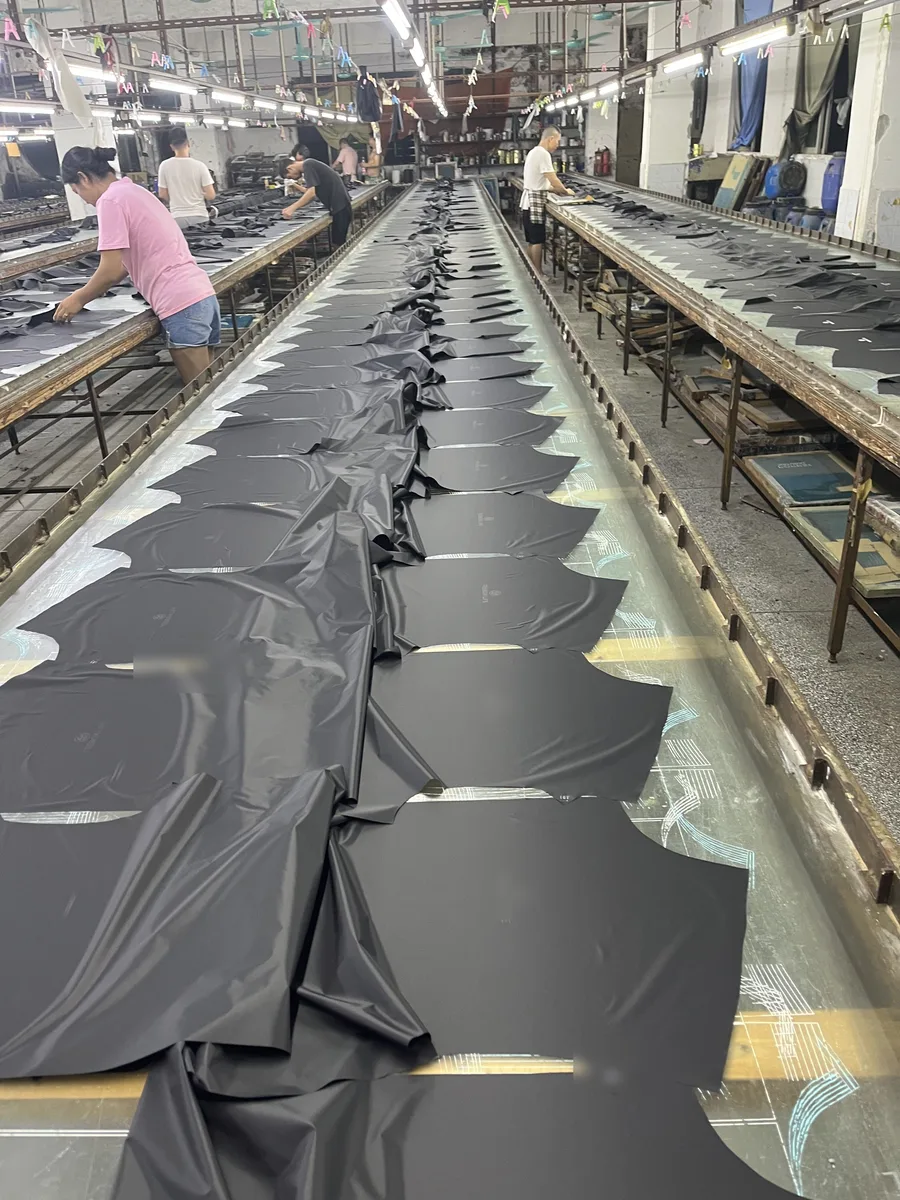
Fabric and coating treatments are sourced from mills to your specification and checked here before cutting. Cutting, sewing and assembly are done in our own workshop, along with printing, embroidery and heat-transfer labelling.
A backpack carries load, so the fabric decision and the construction decision are the same decision. Panels, straps and base are cut and sewn in our 3,000 sqm sewing workshop in Baigou, where 35 sewing operators run the line — which is why a fabric substitution can be tested on a real body rather than on a swatch. Our Tianjin team handles export documentation once the specification is settled.
Tell us the use case and target quantity, and we'll suggest a fabric and lining combination — and tell you where a cheaper option would cost you in service life.
Sampling generally runs 7–15 days depending on complexity. Revisions are made on our own floor rather than waiting in an outside queue. Bulk timing depends on quantity and is confirmed before the order is placed.
MOQ from 50 pcs*
* Final MOQ depends on style, fabric and logo method. Anna will confirm in your quotation.